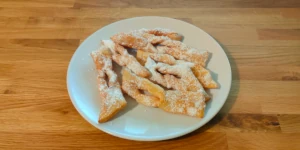
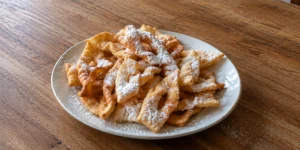
Žagarėliai - Traditional Lithuanian Angel Wings
A traditional Lithuanian fried pastry
Žagarėliai are one of Lithuania's best-known traditional fried pastries. They belong to the large European family of thin, twisted pastries known elsewhere as faworki, chrust, angel wings or similar names. In Lithuania, however, žagarėliai have long had their own place in home cooking, family celebrations and winter festivities.
The name comes from žagaras, meaning a thin dry twig or branch. The name describes exactly what a good crispy žagarėlis should resemble: thin, light, dry and delicate rather than thick and bread-like. The dough is rolled very thin, cut into strips or diamond shapes, slit in the middle and twisted by pulling one end through the opening.
There is no single recipe used by every Lithuanian family. Some versions use whole eggs, others rely mainly on egg yolks. Sour cream, butter, sugar and a small amount of vodka, spirit or rum appear in many traditional recipes, although the exact proportions vary. Some families make soft and slightly thicker versions, while others prefer very thin, dry and crisp pastries.
Žagarėliai in Lithuanian home cooking
Žagarėliai are especially associated with winter celebrations and carnival traditions, including Užgavėnės, the Lithuanian pre-Lenten festival. Fried foods traditionally appear at this time of year, when rich dishes were prepared before the beginning of Lent.
They are also a familiar homemade dessert for family gatherings, weekends and holidays. A large bowl of freshly fried pastries covered in powdered sugar is meant for sharing. Their simple ingredients also explain why the recipe has remained popular for generations: flour, eggs, dairy and frying fat were common ingredients in many Lithuanian kitchens.
A recipe with a long Lithuanian history
Žagarėliai are not a modern invention. Lithuanian recipes for this type of pastry were already appearing in twentieth-century cookbooks. A recipe published in the popular 1936 Lithuanian cookbook Didžioji virėja used egg yolks, flour and rum, while another variation included vodka or cognac in the frying fat and recommended frying the pastries in pork lard.
This historical evidence also shows why there is no reason to treat one modern formula as the only authentic version. Sour cream, butter, eggs or egg yolks, a small amount of alcohol and frying in lard or oil all belong to the broader traditional repertoire of Lithuanian žagarėliai.
The secret is rolling the dough thin
The most important part of making crispy žagarėliai is not simply mixing the dough. It is rolling it thin enough. Thick dough produces a heavier fried pastry, while a thin sheet becomes light and delicate in the hot fat.
Traditional recipes and family methods also often include beating or repeatedly folding the dough with a rolling pin before rolling it out. This is a familiar old-fashioned technique used to work the dough thoroughly and is still valued by many Lithuanian home cooks who want the characteristic blistered surface.
Once the dough has rested, roll it as thinly as possible without tearing it. Cut it into strips or diamonds, make a slit in the centre and pull one end through the opening. The twisted shape is one of the details that makes žagarėliai immediately recognizable.
Frying the pastries
Žagarėliai are traditionally fried rather than baked. Older recipes often call for pork lard, while modern home recipes frequently use neutral vegetable oil. Both approaches are found in Lithuanian cooking, although lard gives a more traditional flavour.
The fat should be properly hot before the pastries go in. If it is too cool, the dough stays in the fat too long and becomes greasy. If it is excessively hot, the outside darkens before the pastry has time to puff and cook properly.
Fry only a few pieces at a time. Žagarėliai cook quickly and their thin shape means they can go from pale gold to dark brown in a short time. Turn them once, remove them when lightly golden and allow excess fat to drain.
How to serve traditional žagarėliai
The classic finish is simple: powdered sugar. Dust the pastries after frying and allow them to cool slightly before serving. Some older and regional recipes also use vanilla sugar or cinnamon mixed with sugar.
A good žagarėlis should be light, thin and crisp. It should break easily when bitten and have a delicate fried flavour rather than tasting heavy or oily. Like many traditional home recipes, the exact appearance can vary, but thinness and crispness remain the most recognizable characteristics.
Expert tips:
Roll thinner than you think
The easiest way to ruin crispy žagarėliai is to leave the dough too thick. Thin dough gives the pastries their delicate structure and allows them to fry quickly without becoming heavy.
Use as little extra flour as possible
Only use enough flour to stop the dough from sticking. Excess flour falls into the hot fat, burns and can give the later batches a darker colour and unpleasant taste.
Let the dough rest before rolling
If the dough immediately shrinks back after rolling, stop and let it rest a little longer. Forcing it to stay thin will make shaping frustrating and can cause the pieces to become uneven.
Fry a test piece first
A small piece of dough is the simplest way to check the frying fat. If it barely reacts, the fat needs more heat. If it becomes dark immediately, lower the heat before frying the full batch.
Do not overcrowd the pan
Žagarėliai expand and float while frying. Frying too many at once makes them difficult to turn and can lower the temperature of the fat.
Dust with sugar after frying
Powdered sugar belongs on the finished pastries, not in the frying fat. Allow them to cool slightly first so the sugar stays visible instead of immediately melting away.
Storage:
How to store
Allow the žagarėliai to cool completely before storing. Keep them in a cardboard box, tin or loosely covered container in a cool, dry place. Avoid sealing them while warm because trapped moisture will soften the pastries.
Shelf life
Žagarėliai are at their best on the day they are fried, but properly cooled pastries can remain pleasant for up to 2 days. Their texture gradually becomes less crisp over time.
Restoring crispness
If the pastries become slightly soft, place them briefly in a low oven until dry and crisp again. Let them cool before adding more powdered sugar.
Freezing instructions
Freezing the finished pastries is not ideal because they can lose their delicate crisp texture. If necessary, freeze the raw dough well wrapped for up to 1 month, then thaw it slowly in the refrigerator before rolling and frying.
Recipe information:
Ingredients for the dough
Substitutions for ingredients:
- Vodka - Rum or another neutral spirit can be used in a similar quantity. Traditional Lithuanian recipes vary, and different households use different spirits.
- Sour cream - Use full-fat thick sour cream for the closest result. Thick Greek-style yogurt can work in an emergency, but the flavour and texture will be slightly different.
- Butter - The butter can be omitted in some traditional-style versions because recipes vary between households. The finished dough may be slightly different but will still produce recognizable žagarėliai.
- Pork lard - Use a neutral frying oil such as sunflower or rapeseed oil. Lard gives a more traditional flavour, but neutral vegetable oils are common in modern home kitchens.
- Egg yolks - Some Lithuanian recipes use whole eggs instead of only yolks. If changing the eggs, adjust the flour gradually because whole eggs add more liquid to the dough.
- Powdered sugar - Vanilla sugar mixed with powdered sugar is a traditional-style variation. Some recipes also include a small amount of cinnamon in the sugar.
Preparation
1. Mix the egg yolks and dairy
2. Make the dough
3. Beat and fold the dough
4. Let the dough rest
5. Roll the dough very thin
6. Cut and twist the pastries
7. Heat the frying fat
8. Fry until pale golden
9. Drain and dust with sugar
Frequently Asked Questions (FAQ):
Are Žagarėliai the same as Polish faworki?
They belong to the same broad family of thin European fried pastries and are very similar to Polish faworki or chrust. However, Lithuanian žagarėliai have their own traditional recipes, regional names and family variations.
Why are they called Žagarėliai?
The Lithuanian word is connected with a thin dry twig or branch. The name reflects the ideal texture of the pastry: thin, light, dry and crisp.
Do traditional Žagarėliai contain sour cream?
Many traditional Lithuanian recipes do include sour cream, but there is no single universal formula. Other family recipes use different proportions of eggs, butter, sugar or dairy.
Do I need to beat the dough with a rolling pin?
It is not absolutely required for every version, but it is a well-known traditional technique used in recipes for crispy žagarėliai. Repeated folding and beating is especially associated with versions that aim for a thin, blistered surface.
Can I bake Žagarėliai instead of frying them?
You can bake a shaped dough, but the result will not have the traditional texture of fried žagarėliai. The characteristic light, crisp fried pastry is produced by cooking the thin dough in hot fat.
What is the best fat for frying Žagarėliai?
Older recipes often use pork lard, while modern recipes commonly use neutral vegetable oil. Both can produce good results as long as the frying temperature is controlled.
When are Žagarėliai traditionally eaten?
They are especially associated with winter celebrations and carnival traditions such as Užgavėnės, but they are also a popular homemade dessert for family gatherings and holidays.