
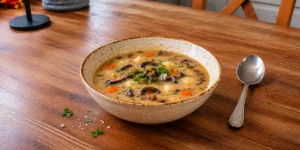
Zupa grzybowa (Polish Wild Mushroom Soup)
What is Wigilijna Zupa Grzybowa?
Wigilijna zupa grzybowa is a Polish Christmas Eve soup made primarily from dried forest mushrooms and vegetables. The mushrooms produce a dark, aromatic broth that can be served clear or lightly enriched with butter or cream depending on regional and family tradition.
It is one of the best-known alternatives to red beetroot barszcz at the Polish Wigilia table. Some families serve barszcz with mushroom-filled uszka, while others begin Christmas Eve supper with mushroom soup. The Polish Ministry of Culture lists mushroom soup among the dishes most commonly associated with Christmas Eve in Poland.
The exact form varies considerably. It can contain noodles, small dumplings, groats or be served with potatoes. Some versions are completely lean and clear, while others contain butter, a roux or cream.
A documented nineteenth-century Polish Mushroom Soup
Polish mushroom soup is not a recent Christmas invention. Lucyna Ćwierczakiewiczowa included a detailed Zupa grzybowa in the 1871 edition of 365 obiadów za 5 złotych.
She explicitly described mushroom soup as a substitute for meat broth on fasting days. Her version used dried mushrooms, root vegetables, whole onions, allspice and pepper. Once the mushrooms were tender, the broth was strained and the mushrooms sliced and returned to the soup.
The soup could be prepared in two main styles. A sour version was seasoned with vinegar and thickened with butter and flour, sometimes with fried onion. A milder version omitted the vinegar and could be served with groats instead.
Most importantly for the Christmas tradition, Ćwierczakiewiczowa included mushroom soup directly among her suggested dishes for Christmas Eve. Her Christmas menu lists both ordinary mushroom soup and a milder mushroom soup served with groats.
Early twentieth-century Polish Mushroom Soup
A 1912 cookbook simply titled Kuchnia polska provides another detailed recipe. It calls for several large dried porcini mushrooms cooked with root vegetables, whole onions, carrot and allspice until the mushrooms are tender.
The finished soup could be served with elongated dumplings, Italian-style pasta or thick groats. The book also states that it could be prepared without butter or, in another variation, made slightly sour and finished generously with cream.
This shows that the choices still seen today - clear or creamy, noodles or another starch, butter or no butter - already belonged to Polish mushroom-soup cooking more than a century ago.
Mushroom Soup and Polish Christmas Eve
Dried mushrooms have a particularly strong place in Polish Christmas food. Their long shelf life allowed autumn forest harvests to be preserved for winter, and mushroom dishes fitted naturally into the traditional meatless Christmas Eve supper.
Modern official descriptions of Polish Wigilia continue to name mushroom soup among the characteristic dishes of the evening. The tradition is not confined to one region, although the way the soup is cooked changes considerably across Poland.
For that reason this general recipe is classified as Polish rather than exclusively Małopolska. Małopolska nevertheless has important local mushroom-soup traditions of its own.
Małopolska and regional variations
One documented Małopolska example is zupa zoproska from Podhale, registered on Poland's List of Traditional Products. It is based on dried porcini or other local mushrooms and includes root vegetables, bay leaf, allspice, onion, butter and flour, but also distinctive seasonings such as mint and caraway. It may be served with potatoes or hałuski.
Another official ethnographic record describes settlers originating around Gródek nad Dunajcem serving Christmas Eve mushroom soup with łazanki. This provides specific support for the combination of mushroom soup and flat noodles in southern Polish family traditions.
Elsewhere in Poland, mushroom soups may be served with potatoes, groats, homemade noodles or small dumplings. Some are clear and strongly mushroom-based, while others are thickened or finished with cream.
Why dried forest mushrooms are so important
Dried forest mushrooms produce a much deeper and more concentrated aroma than ordinary cultivated mushrooms. Porcini, known in Polish as borowiki or prawdziwki, are especially prized, while dried bay boletes and mixtures of edible forest mushrooms are also widely used.
Official Polish sanitary guidance specifically identifies dried porcini and bay boletes among the mushrooms commonly used in traditional Christmas cooking and recommends soaking dried mushrooms before cooking them.
For safety, use commercially packaged dried mushrooms from a reliable source or mushrooms that were positively identified before drying. A recipe or photograph should never be used to identify wild mushrooms.
Soaking dried mushrooms
Dried mushrooms should be rehydrated before cooking. For this recipe, two hours in cool water gives thick dried pieces enough time to soften while also producing a strongly flavored soaking liquid.
For a shorter preparation, many commercially dried mushrooms soften after 20 to 30 minutes in water. Very thick traditionally dried pieces can require considerably longer.
If soaking mushrooms overnight or for several hours beyond the normal preparation period, keep them covered in the refrigerator rather than leaving hydrated mushrooms at room temperature overnight.
Using the mushroom soaking water
The dark soaking water contains a great deal of mushroom flavor and should not automatically be discarded. Traditional Polish regional descriptions also document cooking soaked mushrooms in the same water in which they were rehydrated.
The main problem is grit. Dried forest mushrooms can contain fine sand or particles that settle on the bottom of the bowl. Lift the mushrooms out rather than pouring everything together, then filter the liquid carefully through a fine sieve lined with cloth or a coffee filter.
Leave the final spoonful of sediment behind. A small loss of mushroom liquid is preferable to a bowl of gritty soup.
The vegetable base
Carrot, parsley root and celeriac form a classic Polish włoszczyzna-style vegetable base. Onion, bay leaf, allspice and black pepper provide additional aroma.
The vegetables should support the mushrooms rather than dominate them. Simmer them gently with the mushrooms and filtered soaking liquid until both the root vegetables and mushrooms have released their flavor.
This creates a meatless broth with enough depth that meat stock is unnecessary.
Should the mushrooms be fried in butter?
Not necessarily. Historical Polish recipes often cook the dried mushrooms directly in the soup. Frying the cooked mushrooms with onion in butter is a household variation that produces a richer, more rounded flavor.
This recipe retains a short butter-and-onion sauté because it works particularly well with a dark mushroom broth, but it should not be presented as essential to authenticity.
For a stricter meatless or dairy-free Christmas Eve version, use rapeseed oil instead of butter.
Should Wigilijna Zupa Grzybowa contain cream?
Cream is optional. Historical Polish recipes document both clear mushroom soup and versions enriched with cream.
A small amount of cream makes the soup softer and rounder but changes the appearance from a clear dark broth to a lighter soup. If you want the darkest, most mushroom-forward version, simply leave it out.
If using cream, temper it with some hot soup before adding it and avoid a violent boil afterward.
Łazanki, noodles, groats or potatoes?
There is no single mandatory accompaniment. Nineteenth- and early twentieth-century Polish cookbooks already document mushroom soup with cut noodles, pasta and groats.
Łazanki are a particularly suitable modern choice and are documented in regional Christmas traditions. They are small square or diamond-shaped pieces of pasta rather than long ribbon noodles.
Cook them separately in salted water and add them to individual bowls. This prevents starch from making the mushroom broth cloudy and allows leftover soup to be stored without the pasta becoming swollen.
Potatoes are another authentic regional option and are particularly common with some highland and rural mushroom soups.
How to serve Wigilijna Zupa Grzybowa
Serve the soup hot with the mushrooms clearly visible and the noodles added to each bowl shortly before serving. A small amount of chopped parsley can be added at the end.
If serving the soup as part of Christmas Eve supper, the dairy-free version with rapeseed oil is especially appropriate for households that preserve a stricter fasting tradition. Other families traditionally use butter or cream, so both styles belong comfortably within Polish Christmas cooking.
Expert tips:
Use dried Polish forest mushrooms
Porcini and bay boletes give the soup its characteristic deep aroma. Use commercially packaged dried mushrooms or mushrooms that were positively identified before drying.
Filter the soaking water
The soaking liquid contains valuable mushroom flavor, but dried forest mushrooms can release sand and fine debris. Filter the liquid carefully and leave the sediment behind.
Do not leave mushrooms soaking overnight at room temperature
A short soak can be done during preparation, but if the mushrooms are soaking for many hours or overnight, keep them covered in the refrigerator.
Frying the mushrooms is optional
Historical Polish mushroom soups often cooked the mushrooms directly in the broth. Frying them briefly with onion and butter or oil is a flavorful household variation rather than a requirement.
Cream is optional
Both clear and cream-finished Polish mushroom soups are historically documented. Leave the cream out if you want a darker, more intensely mushroom-flavored Christmas Eve soup.
Cook the noodles separately
Separate cooking keeps excess starch out of the broth and prevents leftover noodles from absorbing most of the soup during storage.
Do not boil aggressively
Gentle simmering preserves a cleaner broth and prevents the mushrooms and vegetables from breaking down unnecessarily.
Storage:
Refrigeration
Cool the soup promptly and keep it in a covered container in the refrigerator. Store cooked noodles separately.
Shelf life
Properly refrigerated mushroom soup is best eaten within 3 to 4 days.
Reheating
Reheat the soup gently on the stove until thoroughly hot. If cream has been added, avoid prolonged hard boiling.
Freezing
For the best texture, freeze the mushroom soup before adding cream and without the noodles. Keep frozen for about 2 to 3 months, thaw in the refrigerator and add freshly cooked noodles when reheating.
Recipe information:
Mushroom Soup
For Serving
Substitutions for ingredients:
- Dried Porcini - Use a commercially sold mixture of edible dried Polish forest mushrooms, including bay boletes. Cultivated mushrooms can be added for volume but do not reproduce the concentrated flavor of dried forest mushrooms.
- Butter - Use rapeseed oil for a dairy-free version closer to stricter traditional fasting practice.
- Heavy Cream - Omit it completely for a clear mushroom broth. Sour cream can also be used in a tangier household variation if carefully tempered before adding.
- Łazanki - Use homemade cut noodles, other egg noodles, groats or boiled potatoes. Historical and regional Polish mushroom soups are documented with several different accompaniments.
Prepare the Mushrooms
1. Rinse the dried mushrooms
2. Soak
3. Remove the mushrooms
4. Filter the soaking liquid
Prepare the Broth
1. Prepare the vegetables
2. Combine the broth ingredients
3. Simmer gently
4. Remove the vegetables and mushrooms
Finish the Mushroom Soup
1. Cook the onion
2. Add the mushrooms
3. Return to the broth
4. Add optional cream
5. Add parsley
Cook the Noodles and Serve
1. Cook the Łazanki
2. Serve
Frequently Asked Questions (FAQ):
Is mushroom soup a traditional Polish Christmas Eve dish?
Yes. The Polish Ministry of Culture lists mushroom soup among the foods commonly served for Wigilia, and nineteenth-century Polish cookbooks already included mushroom soup in Christmas Eve menus.
How old is Polish mushroom soup?
It is clearly documented at least in nineteenth-century Polish cookery. Lucyna Ćwierczakiewiczowa published a detailed dried-mushroom soup recipe in 1871 and included mushroom soup among her suggested Christmas Eve dishes.
How did Ćwierczakiewiczowa make mushroom soup?
Her recipe used dried mushrooms, root vegetables, whole onions, allspice and pepper. The mushrooms were cooked until tender, sliced and returned to the broth. The soup could be served sour with vinegar and a butter-and-flour thickener or milder with groats.
Is Wigilijna Zupa Grzybowa specifically from Małopolska?
No. Mushroom soup is a Christmas Eve tradition in many parts of Poland. Małopolska has distinctive local versions, including Podhale zupa zoproska, but a general Polish mushroom soup should not be assigned exclusively to that region.
Is mushroom soup with Łazanki traditional?
Yes. Historical recipes document mushroom soup with cut noodles and pasta, and ethnographic records of Christmas Eve traditions connected with families originating near Gródek nad Dunajcem specifically mention mushroom soup with łazanki.
What mushrooms are best for Polish Christmas mushroom soup?
Dried porcini are particularly prized. Dried bay boletes and mixtures of safely identified edible forest mushrooms are also traditional and provide a deep forest aroma.
Can fresh mushrooms replace the dried mushrooms?
Fresh mushrooms can be added, but dried forest mushrooms are central to the characteristic flavor of this Christmas Eve version. Fresh cultivated mushrooms alone produce a much milder broth.
How long should dried mushrooms be soaked?
Commercial dried mushrooms can soften in as little as 20 to 30 minutes, while thick pieces benefit from 1 to 2 hours. Very hard traditionally dried mushrooms can be soaked longer or overnight in the refrigerator.
Can dried mushrooms be soaked overnight on the counter?
For an extended or overnight soak, refrigerate the mushrooms in their soaking water rather than leaving hydrated mushrooms at room temperature for many hours.
Should the mushroom soaking water be used?
Yes. It contains a large amount of mushroom flavor. Filter it carefully through a fine cloth, coffee filter or very fine sieve to remove sand and sediment before adding it to the soup.
Does traditional Christmas mushroom soup contain cream?
It can, but cream is not required. Historical Polish recipes document both dairy-free clear mushroom soups and versions finished with cream.
Does traditional mushroom soup contain butter?
Some historical recipes use butter and flour, while stricter fasting versions can omit butter. Rapeseed or another vegetable oil is appropriate for a dairy-free Christmas Eve version.
Why is there no meat stock?
The Christmas Eve supper was traditionally meatless, so dried mushrooms, their soaking liquid and root vegetables provide the broth instead of meat.
Can potatoes be served with the soup?
Yes. Potatoes are documented with several regional Polish mushroom soups. Other traditional accompaniments include noodles, groats and dumplings.
Should Polish Christmas mushroom soup be blended?
It does not need to be. Clear or lightly thickened soup with visible pieces of mushroom is strongly documented historically. Puréed cream soups are another style but are not necessary for a traditional Wigilia version.
Can this soup be made vegan?
Yes. Use rapeseed oil instead of butter, omit the cream and serve with egg-free noodles or potatoes. The mushroom and vegetable broth itself requires no animal ingredients.
Can I use mushrooms I picked myself?
Only use wild mushrooms that were positively identified as edible before drying. Polish sanitary authorities regulate the sale of wild mushrooms and recommend using properly identified or commercially packaged products.