Wanko Soba: Traditional Iwate-Style Buckwheat Noodles
What is Wanko Soba?
Wanko Soba is a traditional way of serving buckwheat noodles associated with Iwate Prefecture in northern Japan, particularly Morioka and Hanamaki. Instead of receiving one large bowl of soba, the diner is served a succession of very small portions. As soon as one portion is eaten, another is added to the bowl.
The word wanko is associated with the small wooden bowls traditionally used for the meal. What makes Wanko Soba distinctive is therefore not a special variety of noodle or a complicated sauce, but the ritual of repeatedly serving freshly cooked soba in small quantities.
A Tradition of Hospitality in Iwate
Wanko Soba developed from the culture of hospitality found in Iwate. According to the official Iwate tourism tradition, people in the Morioka and Hanamaki areas served soba when entertaining guests. Serving small portions made it possible to offer freshly cooked noodles repeatedly, even when many people were gathered together.
Hanamaki preserves a well-known local story connecting Wanko Soba with Nanbu lord Toshinao more than four centuries ago. According to the tradition, he stopped in Hanamaki while travelling to Edo and was served the local soba in a small bowl. He enjoyed it and requested additional servings. The story remains an important part of Hanamaki's Wanko Soba tradition, although it is best understood as a regional origin tradition rather than a precisely documented moment when the dish was invented.
Morioka and Hanamaki Styles
Wanko Soba is strongly associated with both Morioka and Hanamaki, but the serving customs are not identical. The familiar Morioka experience can be lively. A server stands beside the diner and continually adds another mouthful of noodles, traditionally encouraging them with rhythmic calls such as hai, jan-jan or similar local expressions.
The meal continues until the diner places a lid over the bowl, signalling that no more noodles are wanted. Counting the finished bowls has also turned Wanko Soba into a playful eating challenge, although hospitality rather than competition lies at the heart of the tradition.
Hanamaki preserves a quieter style. Traditional restaurants may serve the noodles according to the diner's pace rather than using the energetic chants associated with tourist-oriented Wanko Soba in Morioka.
What is Served with Wanko Soba?
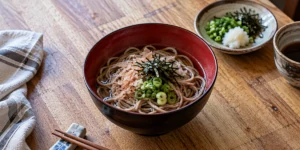
The noodles themselves are Japanese soba made primarily from buckwheat flour, usually with some wheat flour added for strength. Each serving is deliberately tiny, often only enough for one or two mouthfuls.
Wanko Soba is accompanied by yakumi and small side dishes that allow the diner to change the flavor between servings. Common accompaniments include finely sliced scallions, grated daikon, nori and wasabi. Depending on the restaurant, additional foods such as mushrooms, grated yam, pickles or pieces of fish may also be offered.
Making Wanko Soba at Home
You do not need dozens of lacquer bowls to recreate the basic experience at home. One small bowl per diner is enough. Cook the soba, rinse it thoroughly, and divide it into very small portions. One person acts as the server and adds another portion whenever the diner finishes the previous one.
The important part is the rhythm of serving. Wanko Soba should feel different from eating an ordinary bowl of soba. Keep the portions small, offer several condiments separately and continue serving until the diner covers the bowl or clearly signals that the meal is finished.
Why Soba Must Be Rinsed
Soba releases a considerable amount of starch while cooking. After boiling, rinse the noodles thoroughly under cold running water, gently rubbing and separating the strands with your hands. This removes loose surface starch and prevents the noodles from becoming sticky or gummy.
Once rinsed, drain them very well. Excess water left on the noodles will dilute their flavor and any dipping or seasoning liquid served alongside them.
Expert tips:
Use Plenty of Boiling Water
Soba releases starch rapidly. A large volume of boiling water gives the noodles room to move and helps prevent the strands from sticking together.
Do Not Salt the Cooking Water
Unlike Italian pasta, Japanese soba is normally cooked in unsalted water. Seasoning comes from tsuyu and the accompanying condiments.
Rinse Thoroughly
Rinsing is one of the most important steps. Gently wash the cooked noodles with your hands under cold water to remove the loose starch responsible for a sticky texture.
Keep Every Serving Small
The defining feature of Wanko Soba is repeated small servings. Do not fill the bowl as you would for ordinary soba; each refill should contain only a small mouthful.
Do Not Treat It as an Eating Contest
Modern Wanko Soba is famous for counting bowls, but the tradition is rooted in hospitality. At home, serve at a comfortable pace and concentrate on the ritual rather than speed.
Storage:
How to store
Cooked soba is best eaten immediately. If necessary, drain it thoroughly and refrigerate it in an airtight container. Store the tsuyu and garnishes separately.
Shelf life
For the best texture, eat cooked soba the same day. Refrigerated noodles can be kept until the following day, but they become softer and more prone to sticking.
Freezing instructions
Freezing cooked soba is not recommended because thawing noticeably damages its delicate texture. Prepared dashi-based tsuyu can be frozen separately.
Recipe information:
Soba Noodles
Simple Soba Tsuyu
Traditional-Style Yakumi and Accompaniments
Substitutions for ingredients:
- Japanese Soba - Use another dried Japanese soba containing buckwheat and wheat flour. Check the ingredient list because products sold as soba can contain very different proportions of buckwheat.
- Katsuobushi Dashi - For a vegetarian version, prepare dashi from kombu and dried shiitake mushrooms. The flavor will differ from bonito-based dashi but works well with soba.
- Fresh Wasabi - Prepared Japanese wasabi paste can be used when fresh wasabi is unavailable.
- Nagaimo - Simply omit it if unavailable. Wanko Soba accompaniments vary, so it is not necessary for recreating the basic serving tradition.
Prepare the Wanko Soba
1. Prepare the Tsuyu
2. Prepare the Condiments
3. Boil the Soba
4. Rinse the Noodles
5. Drain Thoroughly
6. Divide into Small Portions
7. Serve Wanko Style
8. Finish the Meal
Frequently Asked Questions (FAQ):
What is Wanko Soba?
Wanko Soba is a traditional Iwate way of eating soba in which very small portions of noodles are repeatedly served into a diner's bowl. It is particularly associated with Morioka and Hanamaki.
Where does Wanko Soba come from?
Wanko Soba is associated with Iwate Prefecture in the Tohoku region of northern Japan, especially the cities of Morioka and Hanamaki.
What does wanko mean?
In the regional tradition, wanko refers to the small wooden bowl used for serving the noodles.
Why are the portions so small?
The small portions are connected with the tradition of repeatedly offering freshly prepared soba to guests. Instead of one large serving, the host or server continues adding small portions as they are eaten.
How do you stop eating Wanko Soba?
In the well-known Morioka serving style, the diner places the lid firmly on the bowl when finished. Until then, the server may continue adding another small serving.
Is Wanko Soba an eating competition?
It can be enjoyed as a challenge and diners often count how many bowls they finish, but its cultural background is associated with hospitality and repeatedly serving guests freshly cooked soba.
Are Morioka and Hanamaki Wanko Soba the same?
They share the same basic tradition of repeated small servings, but their presentation can differ. Morioka is especially known for energetic calls from servers, while Hanamaki also preserves a calmer hospitality-focused serving style.
What condiments are served with Wanko Soba?
Common accompaniments include sliced scallions, grated daikon, nori and wasabi. Restaurants may provide additional seasonal side dishes and toppings.
How many Wanko Soba bowls equal one normal serving?
The exact amount varies because restaurants use different portion sizes. A Wanko bowl contains only a small mouthful, so many individual servings are needed to equal a conventional bowl of soba.
Can Wanko Soba be made at home?
Yes. Cook and rinse soba normally, divide it into very small portions and have one person repeatedly serve the noodles into small bowls. Condiments can be placed on the table so diners can vary the flavor as they eat.
Is Wanko Soba gluten-free?
Not necessarily. Many Japanese soba noodles contain both buckwheat and wheat flour. Anyone avoiding gluten should check the package carefully and use noodles made entirely from buckwheat in a gluten-free facility.
Similar recipies: