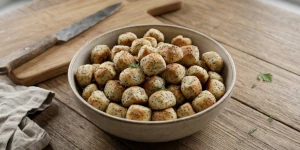
Kučiukai: Lithuanian Christmas Eve Poppy Seed Biscuits
- Preparation time
- 1 hour 15 minutes
- Total time
- 1 hour 30 minutes
- Yield
- 6 servings

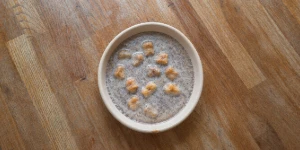
Aguonpienis is made by softening poppy seeds, grinding them until they release their pale, milky liquid, and then diluting the ground seeds with water. Simply stirring whole poppy seeds into water will not produce the characteristic colour, flavour or texture.
Aguonpienis, also called aguonų pienas, is a traditional Lithuanian preparation served during Kūčios, the Christmas Eve supper. Despite its name, it contains no dairy milk. The traditional base is poppy seeds and water, usually sweetened with sugar or honey.
It is especially associated with kūčiukai, small Lithuanian Christmas Eve biscuits. The biscuits are placed in bowls and covered with aguonpienis shortly before eating, so they can be eaten while still slightly firm or allowed to soften in the liquid.
Aguonpienis was not used only with kūčiukai. Lithuanian culinary descriptions also record poppy milk being eaten with fasting dishes such as grain porridge, pancakes and other foods traditionally served without meat or dairy during periods of fasting.
Traditionally, the seeds were scalded or soaked in hot water to soften them before grinding. Older methods involved crushing the softened seeds in an earthenware vessel with a wooden implement or grinding them in a mortar. A fine meat grinder or poppy-seed mill is a practical modern equivalent.
The important point is to continue grinding until the seeds become a pale, moist paste. This change in colour shows that the seeds have been sufficiently crushed and their oils have begun to form the characteristic milky liquid.
This recipe uses 200 g poppy seeds and 1 litre of boiled and cooled water. Lithuanian household recipes vary considerably in strength, and some use considerably more water. Start with the litre given here and add a little more only if you prefer a lighter aguonpienis.
Sugar is used here because it gives a simple fasting and vegan version. Honey is another traditional way of sweetening aguonpienis. The amount of sweetener is normally adjusted to taste rather than treated as a fixed ratio.
There is no single required texture. Some traditional descriptions strain the diluted poppy mixture through cloth, while others serve it together with the finely ground seeds. Leaving the seeds in produces a darker, more rustic drink that settles noticeably as it stands. Straining makes it smoother and paler.
Stir aguonpienis immediately before serving because the ground poppy seeds naturally settle. Put kūčiukai into individual bowls and pour the poppy milk over them shortly before eating. They can be eaten immediately for a firmer texture or left for several minutes to soften.
Browse our Lithuanian Christmas recipes for more Kūčios dishes, or read about Lithuanian Christmas traditions.
Properly ground poppy seeds become noticeably paler and form a moist paste. If most of the seeds remain whole and dark, continue grinding before adding the rest of the water.
Passing softened poppy seeds through a fine meat grinder two or three times closely reproduces the texture obtained by traditional hand grinding while requiring much less work.
Serve the biscuits separately and add them to individual bowls. They absorb aguonpienis quickly, so each person can decide whether to eat them firm or softened.
Keep the prepared aguonpienis covered in the refrigerator at 4°C / 40°F or below and use it within 24 hours for the best quality. Stir thoroughly before serving because separation and settling are normal.
Store kūčiukai dry and add them only when serving. Biscuits left in aguonpienis for a long time will become very soft.